
The Hudson County Family Court in New Jersey handles legal matters that affect families, including divorce, child custody, and support cases. It provides a structured environment where disputes are resolved according to state law. The court ensures decisions protect the rights and interests of all parties. Judges oversee cases carefully, considering evidence and testimony before ruling. This makes the court a central part of family law in Hudson County, NJ.
The court deals with a variety of family law cases, including parenting time, child and spousal support, and domestic violence matters. Hudson County Court oversees the filing of petitions, the scheduling of hearings, and the enforcement of judicial orders throughout these proceedings. The court also helps establish custody arrangements that prioritize the child’s best interests. This page explains procedures, timelines, and key information for those involved in family law matters. It provides clear insights for anyone interacting with the family court in Hudson County, New Jersey.
What Is Hudson County Family Court?
Hudson County Family Court is the New Jersey court that handles legal matters related to families, such as divorce, child custody, support, and domestic violence cases. Located in Jersey City, it focuses exclusively on family law cases to ensure fair and timely resolution for all parties. The Family Division, also known as the Superior Court, Family Part, is part of the New Jersey state court system.
It has jurisdiction over various family-related legal issues, including:
- Divorce and legal separation
- Child custody and parenting time disputes
- Child and spousal support enforcement
- Domestic violence and restraining orders
- Paternity cases
These courts follow New Jersey laws and aim to provide a legal environment centered on family needs. Cases are generally heard by judges trained specifically in family law, and the court may coordinate with other related agencies to support families during proceedings.
Location and Related Courthouses
Hudson County Family Court is housed in the Hudson County Administration Building at 595 Newark Avenue, Jersey City, NJ. Some family law cases may also be heard at the William J. Brennan Courthouse, depending on the type of case or the parties involved. This ensures that each case is assigned to the appropriate judicial team and facility.
Many families in Hudson County turn to experienced family law attorneys, such as LLF Law Firm, to handle matters efficiently and ensure legal rights are protected. Legal representatives assist with filing petitions, attending hearings, and resolving disputes, helping the court process run smoothly.
Family-Focused Legal Approach
The court emphasizes solutions that prioritize the best interests of children and families. Hearings and mediations often involve discussions around:
- Parenting plans and schedules
- Support calculations based on NJ law
- Conflict resolution without prolonged litigation
By focusing on these areas, Hudson County Family Court aims to balance legal requirements with the practical needs of families
How to Search Family Court Records
Searching Hudson County Family Court records can be done efficiently using the right methods and official sources. Users can find divorce, custody, and other family law case records either online or by visiting the court in person.
How to Search Court Records
The most effective way to locate records is to use official portals or the Family Court clerk’s office. Using accurate details, such as the full legal names of parties or the case number, ensures precise results.
Step Online Search:
- Go to https://www.njcourts.gov/courts/family or the Hudson County official portal.
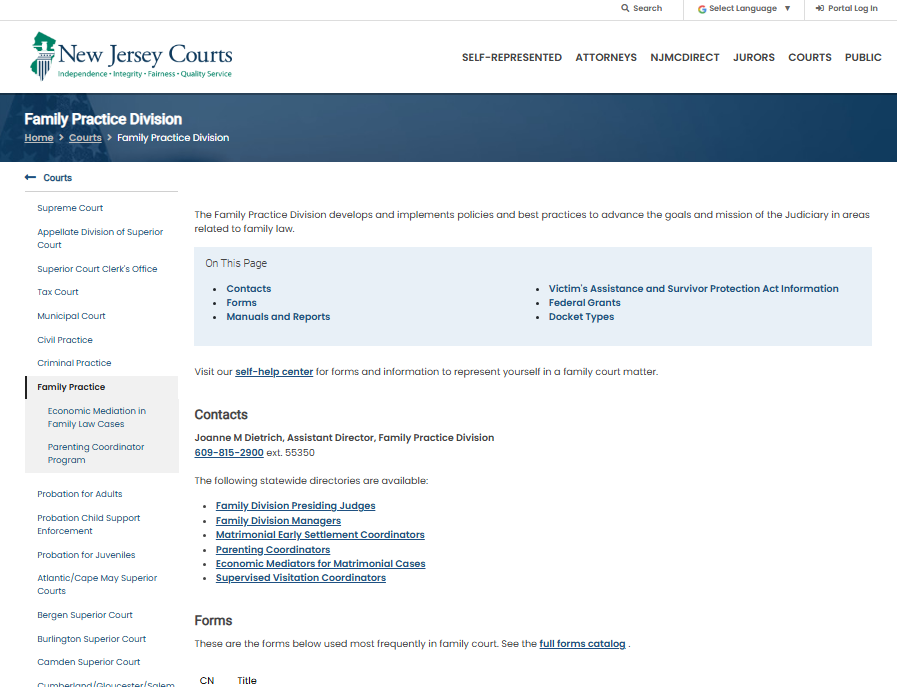
- Click Portal Log In at the top of the page
- Select Attorney Search (njcourts.gov)
- Enter the attorney’s name or license details
- View publicly available attorney information
Tips for an effective search:
- Double-check spelling of names.
- Use full legal names whenever possible.
- Keep the case number for faster lookup.
- Avoid third-party websites that may charge extra or provide inaccurate information.
Where to View Records
Some records are fully available online, but certain documents—especially older or sensitive cases—require an in-person visit.
Online Access
- Portal: NJ Courts Family Division Case Search
- Records available: Divorce, child custody, and child support cases
- Cost: Free to view; downloading PDFs may sometimes incur a small fee depending on portal settings
In-Person Access
- Location: Hudson County Administration Building, 595 Newark Avenue, Jersey City, NJ 07306
- Office Hours: Monday–Friday, 8:30 AM–4:30 PM
- Contact: (201) 795-6400
- Documents available: Certified copies, divorce records, custody case files, full filing history
- Requirements: Valid government ID and completed request form
Fees and Access Options
| Access Method | Records Available | Cost | Notes |
|---|---|---|---|
| Online | Divorce, custody, child support | Free to view; $0.50–$1 per page to download | Best for recent cases; official portal recommended |
| In-Person | Certified copies, full filing history | $0.50 per page; $10–$20 for certified copies | Required for restricted or sensitive cases; must present ID |
Divorce Cases at Hudson County Family Court
Hudson County Family Court handles a range of divorce cases, from uncontested filings to highly contested disputes. The court ensures that all cases follow New Jersey’s legal standards, including residency requirements and grounds for divorce.
What Types of Divorce Cases Are Handled?
Hudson County Family Court processes several types of divorce cases, including dissolution of marriage, contested divorce, and uncontested divorce. An uncontested divorce occurs when both spouses agree on key matters like child custody, support, and property division. Contested divorces arise when spouses cannot reach an agreement, requiring court hearings to resolve disputes.
All divorce cases in Hudson County must comply with New Jersey divorce law. The state recognizes both fault and no-fault grounds for divorce. No-fault divorces, often referred to as irreconcilable differences, are the most common. To file in Hudson County, at least one spouse must meet the residency requirement, typically living in New Jersey for a minimum of one year. The court also has jurisdiction over related family matters, including child custody, alimony, and division of marital property. Understanding the type of divorce helps residents determine the necessary documents and anticipated court involvement.
Key points:
- Dissolution of marriage: Legally ends the marriage.
- Uncontested divorce: Spouses agree on all terms; faster resolution.
- Contested divorce: Court intervention required to settle disagreements.
- Residency requirement: At least one spouse must live in New Jersey.
- Related family matters: Custody, support, property division, and alimony.
Step Divorce Filing Process
The divorce filing process at Hudson County Family Court begins with submitting a divorce complaint. The plaintiff files the complaint along with a summons, which notifies the other spouse. Once filed, the defendant has a set period, usually 35 days, to respond. If no response is filed, the plaintiff may request a default judgment.
For residents, filings occur at the Hudson County Family Court location, typically in Jersey City. The court offers forms and guidance to ensure compliance with New Jersey divorce procedures. It is recommended to review all forms carefully and include supporting documents such as financial statements, marriage certificates, and proof of residency.
Step filing overview:
- Prepare the divorce complaint – include personal information, marriage details, and grounds for divorce.
- File the complaint and summons – submit to Hudson County Family Court.
- Serve the other spouse – deliver documents officially through certified mail or a process server.
- Receive a response – the spouse may contest or accept terms.
- Schedule preliminary hearings – if needed, to address temporary orders on custody or support.
The court emphasizes accurate filing and timely responses to prevent delays. Residents often consult the court clerk’s office for procedural questions.
Timeline & Typical Court Journey
A Hudson County divorce case generally moves through several stages from filing to final judgment. Uncontested divorces often conclude within 4–6 months, while contested cases can take 12 months or longer, depending on the complexity.
Typical stages include:
- Filing the complaint and service to the other spouse.
- Response period (usually 35 days).
- Preliminary hearings for temporary matters like custody or support.
- Discovery and negotiation for property and financial agreements.
- Settlement conference or trial, if disputes remain.
- Final judgment issued by the court.
Child Custody & Parenting Time in Hudson County
Child custody in Hudson County determines which parent has authority over a child’s living arrangements and major life decisions. Parenting time schedules are set when each parent spends time with the child to maintain consistent relationships. Accessing Marriage & Divorce Records can provide important background information on legal histories that may impact custody arrangements, helping families and legal professionals understand prior agreements or dissolutions. These records are essential for ensuring decisions are made with a full understanding of each parent’s legal context.
Custody Types Explained
In Hudson County, custody is split into physical custody and legal custody. Physical custody refers to where the child lives regularly and who takes care of the child’s daily needs. Legal custody allows a parent to make important decisions about the child’s education, healthcare, and overall welfare.
The court applies the best interests of the child standard, which considers the child’s safety, emotional needs, and stability. Both physical and legal custody can be shared jointly, allowing both parents to make decisions and provide care, or granted solely to one parent if circumstances require. Parents going through a divorce can address custody issues through online divorce forms and resources available via the New Jersey courts. These tools explain how to request custody, draft parenting plans, and file required paperwork.
Summary of Custody Types:
- Physical Custody: Where the child lives most of the time.
- Legal Custody: Authority over major decisions in the child’s life.
- Joint Custody: Both parents share responsibilities.
- Sole Custody: One parent holds primary rights and responsibilities.
How Custody Orders Are Decided in Family Court
Hudson County Family Court considers multiple factors to decide custody arrangements that support the child’s well-being. Courts look at parental involvement, stability, and the child’s emotional and physical needs.
Joint custody is often favored if both parents are capable and willing to maintain a stable environment. Sole custody may be granted if one parent cannot provide safe care or fails to meet the child’s needs.
Courts weigh factors such as:
- The child’s age, health, and developmental needs.
- Each parent’s caregiving history and level of involvement.
- Quality of parent-child relationships.
- Any history of domestic violence, neglect, or substance abuse.
- Child’s preference, when age-appropriate and reasonable.
The goal is to maintain consistency in school, routines, and community connections, which supports the child’s stability and growth.
Parenting Time / Visitation Schedules
Parenting time schedules determine when the non-custodial parent spends time with the child. These schedules are enforceable by the court and help ensure both parents remain actively involved.
Schedules vary depending on the child’s age, school schedule, and distance between homes. Typical arrangements include alternating weekends, weekday visits, and designated holidays or vacation periods. Courts encourage parents to create a parenting plan that addresses routines, transportation, and communication expectations.
Some examples of common parenting time schedules:
- Weekends: Every other weekend or alternating weekends.
- Weekdays: Selected evenings during the school week.
- Holidays and Summer: Rotation or split periods for vacations and special occasions.
When disputes arise, the Family Court may mediate adjustments to ensure the child maintains meaningful relationships with both parents.
Modifications & Enforcement
Custody orders and parenting time schedules can change if there is a substantial change in circumstances. Situations such as relocation, job changes, or the child’s changing needs can justify modifications. If one parent violates a parenting schedule, Family Court can enforce the order.
Remedies may include:
- Adjusting visitation schedules to make up lost time.
- Issuing fines or sanctions for noncompliance.
- Requiring mediation to resolve conflicts before more formal actions.
Parents should keep records of missed visits or denied parenting time, as this evidence can support enforcement. Filing a motion for modification or enforcement is done through the court, ensuring decisions continue to prioritize the child’s stability and welfare.
Child Support & Financial Orders
Child support in New Jersey provides financial support for children after parents separate or divorce. Courts calculate support based on income, custody arrangements, and state standards, and enforce these obligations when necessary.
In Hudson County Family Court, child support is usually addressed alongside divorce and custody cases. New Jersey uses a child support guidelines formula that considers both parents’ earnings, healthcare costs, and the time each parent spends with the child. The court seeks to create a stable financial environment while fairly balancing both parents’ responsibilities.
Calculation of Child Support
Child support calculations follow a structured formula. Factors include:
- Gross income of both parents – wages, bonuses, and other earnings.
- Childcare and healthcare expenses – costs necessary for the child’s well-being.
- Parenting time – the number of days the child spends with each parent.
The New Jersey Child Support Guidelines Worksheet helps the court determine the monthly support amount. In complex cases, additional costs like medical bills or special education needs may be considered.
Enforcement of Support Orders
Hudson County courts actively enforce child support orders to maintain compliance. Common enforcement actions include:
- Income withholding – automatic deductions from the paying parent’s paycheck.
- Tax refund interception – redirecting refunds to the custodial parent.
- License suspension – driver’s or professional licenses may be suspended.
- Contempt hearings – legal action if a parent fails to pay.
Enforcement protects children’s financial security. Parents can request modifications if circumstances change, but the court must approve any adjustments.
Connection to Divorce and Custody
Child support orders are closely linked to divorce and custody decisions. The parent with primary physical custody usually receives support, while shared custody may adjust amounts proportionally. Courts may also issue financial orders for spousal support alongside child support. These orders are legally binding and enforceable in New Jersey courts.
Key Factors in Child Support Orders:
| Factor | Description |
|---|---|
| Income | Both parents’ earnings are considered |
| Custody | Parenting time affects support amounts |
| Expenses | Healthcare, childcare, and special needs included |
| Enforcement | Wage garnishment, licenses, or legal action if unpaid |
Child support and support orders in Hudson County ensure children receive consistent financial care. The system balances fairness while holding parents accountable for their financial obligations.
Additional Family Law Cases Heard Here
Hudson County Family Court handles more than divorce and custody cases. It also addresses paternity, domestic violence, adoption, and guardianship matters to protect families and children.
Paternity Cases
Paternity cases establish who is legally recognized as a child’s father. This can affect child support, custody, and inheritance rights. The court may order DNA testing if paternity is disputed, ensuring both parents have clear responsibilities.
Key aspects of paternity cases:
- Confirming legal fatherhood through voluntary acknowledgment or court order
- Setting child support obligations
- Adjusting custody or visitation if necessary
Domestic Violence Cases
The court handles claims of abuse or harassment within households. It can issue protective orders, restraining orders, or temporary custody arrangements to keep victims safe.
Common actions in domestic violence cases:
- Issuing temporary or permanent restraining orders
- Scheduling hearings to evaluate evidence
- Coordinating with law enforcement and social services
Adoption Cases
Adoption proceedings legally transfer parental rights to adoptive parents. Hudson County Family Court oversees domestic and stepparent adoptions, making sure legal requirements are met.
Typical steps in adoption:
- Filing a petition for adoption
- Completing background checks and home studies
- Court hearing to finalize parental rights
Guardianship Cases
Guardianship protects minors or adults who cannot care for themselves. The court appoints a guardian to make decisions regarding health, education, and welfare.
Common responsibilities for guardians:
- Managing medical and educational decisions
- Overseeing finances and daily care
- Reporting to the court on the ward’s well-being
Hudson County Family Court handles these family law matters efficiently while keeping the best interests of children and vulnerable family members in mind. By addressing paternity, domestic violence, adoption, and guardianship, the court ensures families receive comprehensive legal support.
Judges & Court Officials
Hudson County Family Court judges hear cases involving children, custody, support, and domestic matters. They work with court clerks, family division managers, and administrative officials who help run daily court functions and support litigants.
Presiding Judges & Family Court Judges
In Hudson County Superior Court – Family Division, several judges oversee family law cases. These include:
Presiding Judge
- Tara Schillari Rich, P.J.F.P. – Family Presiding Judge for Hudson County, leading the family division and scheduling matters.
Family Court Judges
- Stevie D. Chambers
- Gary Potters
- Martha T. Mainor
- Margaret M. Marley
- Lucinda McLaughlin
- Alberto G. Santos
- Jose Vilarino
- These judges preside over cases such as child custody, parenting time, support, domestic violence orders, and juvenile matters.
Judges may be reassigned from time to time, so current assignments can vary by docket and calendar.
Key Court Officials & Roles
Judges
- Role: Decide legal issues, interpret law, and issue rulings in family law, juvenile, and protection order cases.
- Family Judges handle sensitive matters like custody, support, and domestic violence cases.
Clerks & Managers
- Family Division Manager: Leads administrative support for family case intake, matrimonial, juvenile, and other family court services.
- Example: Makeeya Smith, Family Division Manager.
Court Clerks
- Responsible for managing filings, records, calendars, and public case access.
Ombudsmen / Court Liaisons
- Some courts have court liaisons or program coordinators who assist self‑represented litigants, connect families with resources, and help explain court procedures.
- AV Coordinators support technology and communications during hearings.
How to Access Forms & Records
Hudson County residents can obtain court forms and records through official online portals or by visiting the Family Court in person. Docket information, case forms, and specific records such as FACTS or EAP reports are publicly available through New Jersey’s court system.
Online Court Forms and Filing
The New Jersey Courts provide a wide range of forms for family law cases, including divorce, custody, and child support matters. Most forms can be downloaded directly from the New Jersey Judiciary Forms website. Users can complete these forms digitally and submit them either by mail or in person, depending on the court’s filing requirements.
Key online resources include:
- NJ Judiciary Forms Portal: For all official court forms by case type.
- Hudson County Family Court Clerk’s Office: For local filings and procedural instructions.
- eCourts Public Access: Allows limited viewing of docket information for ongoing cases.
FACTS and EAP Record Access
Records related to the Family Automated Case Tracking System (FACTS) and Early Action Program (EAP) are typically restricted to parties involved, attorneys, or court-approved representatives. Requests must include case numbers and proper identification. The court may provide these documents electronically or in person.
To request these records:
- Contact the Hudson County Family Court Clerk by phone or email.
- Submit a written request including your case information and relation to the case.
- Pay any applicable fees for certified copies, if needed.
In-Person Resources
For those who prefer physical access, forms and records can be obtained at the Hudson County Courthouse, located at 595 Newark Avenue, Jersey City. The Family Court Clerk’s Office can provide guidance on which forms are required and how to retrieve case-specific information.
Location of Hudson County Family Court
The Hudson County Family Court is located at 595 Newark Avenue, Jersey City, NJ 07306, making it easily accessible for residents across Hudson County. Visitors can reach the courthouse via major highways, public transit, or local roads, with multiple parking options nearby.
The main courthouse in Jersey City is part of the William Brennan Courthouse complex, which handles family law matters, including divorce, child custody, and domestic violence cases.
Contact & Address Details:
- Address: 595 Newark Avenue, Jersey City, NJ 07306
- Phone: (201) 795-6200
- Fax: (201) 795-6210
- Email: familycourt@njcourts.gov
- Mailing Address: Hudson County Family Court, P.O. Box 702, Jersey City, NJ 07303
Directions from major highways:
- From I‑78: Take the Jersey Avenue exit and follow signs toward Newark Avenue.
- From I‑95: Exit onto US‑1/9 south and merge toward Jersey City.
- From Route 1/9: Use the Montgomery Street exit for downtown access.
Public transportation:
- PATH train: Journal Square and Exchange Place stations (short taxi or bus ride to courthouse).
- NJ Transit buses: Multiple lines stop near Newark Avenue.
- Ferry access: Ferries from Manhattan to downtown Jersey City.
Parking:
- Limited onsite parking at the courthouse.
- Nearby paid parking garages.
- Metered street parking available; check local regulations.
Frequently Asked Questions – About Family Court
Hudson County Family Court handles a variety of family law matters, including divorce, custody, and child support, and many residents have practical questions about the process. Below are clear answers to commonly asked questions.
How long does a divorce take in Hudson County?
Divorce timelines in Hudson County vary depending on whether the case is contested or uncontested, with uncontested cases often taking around three to six months, while contested divorces may extend beyond a year. The process begins with filing the divorce complaint, serving it to the other spouse, and completing the required paperwork, and delays can arise if there are disagreements over property, child custody, or support. Couples who reach an agreement on all terms usually experience faster resolution, while disputes requiring hearings or mediation can prolong the process, making patience and preparation important for those involved.
Do I need a lawyer?
While hiring a lawyer is not required, having legal representation can help simplify the divorce or custody process and ensure a parent’s rights are protected. Attorneys can assist with completing forms accurately, negotiating settlements, and preparing for hearings, which is especially helpful in complex cases involving property division, child custody disputes, or domestic violence issues. Although the court offers self-help resources for individuals handling uncontested cases, professional guidance can reduce errors and avoid delays in cases where the stakes are high or legal procedures are complicated.
How do I request custody?
To request custody in Hudson County, a parent must file a custody petition with the Family Court, which can involve legal custody, physical custody, or both, depending on the circumstances. The court evaluates factors such as the child’s age and well-being, the quality of the parent-child relationship, and each parent’s ability to provide care, while also considering any history of domestic violence. Parents are encouraged to propose a parenting plan outlining visitation, holidays, and responsibilities, and the judge issues a binding custody order after reviewing the petition and any mediation agreements, ensuring the child’s best interests are maintained.
Can I modify child support?
Child support orders in Hudson County can be modified if there is a significant change in circumstances, including income fluctuations, increased needs of the child, or relocation of a parent. To request a modification, the parent must file a motion with the Family Court and provide supporting documentation such as pay stubs or financial statements. The court then reviews the motion and considers the current financial and family situation before adjusting the support payments to reflect the new circumstances, helping ensure the child’s needs continue to be met fairly.
Where do I file my paperwork?
All family law paperwork should be filed at the Hudson County Family Court Clerk’s Office, which handles filings for divorce, custody, and child support matters. The main courthouse is located in Jersey City, and the court provides access to the appropriate forms, both in-person and online, for convenience. Filing correctly and paying required fees helps ensure the case moves forward without unnecessary delays, and the clerk can provide guidance on submitting documents and confirming that all procedural requirements are satisfied.