Accessing public records in Hudson County, New Jersey, is an essential step for residents, researchers, and businesses seeking reliable information about government, property, court, or vital records. From birth certificates to property deeds and court case details, these records provide transparency, legal verification, and historical insights. Navigating the system can feel complex, but understanding where and how to search ensures that you access accurate and official data efficiently.
Hudson County Court serves as a key source of judicial records and case information for residents, researchers, and legal professionals. Court files may include civil and criminal case details, judgments, motions, and hearing dates that are often needed for legal reference or historical review. By understanding how Hudson County Court records are organized and where they are maintained, users can better identify the appropriate offices, request methods, and access options available for obtaining accurate and up-to-date public court information.
What Are Hudson County Public Records?
Hudson County public records are official documents maintained by government agencies that are available for citizens to view. These records include a wide range of information, from property ownership to court cases, and are governed by New Jersey’s laws to ensure transparency and public access.
Public records in Hudson County refer to government documents that are open for inspection by the public. Citizens, researchers, and legal professionals often seek these records for purposes such as genealogy research, legal proceedings, property verification, and criminal background checks. The New Jersey Open Public Records Act (OPRA) provides the legal foundation for accessing these documents, granting individuals the right to request copies of government records unless they fall under specific exemptions.
Types of Hudson County Public Records
Hudson County maintains several types of public records that are frequently requested:
- Property Records: Include deeds, tax assessments, and property sales history. These help residents track ownership changes and assess property values.
- Court Records: Contain information on civil, criminal, and family court cases, including filings, judgments, and dockets.
- Vital Records: Birth, death, marriage, and divorce certificates fall under this category. They are essential for legal verification and family history research.
- Criminal Records: Offer information about arrests, charges, convictions, and corrections-related data.
These records provide transparency and support a wide range of civic, legal, and personal needs. Many individuals request them to verify historical data, confirm property ownership, or assist in ongoing legal matters.
Legal Basis and Public Rights
The New Jersey Open Public Records Act (OPRA) establishes the rules for public access. It defines which documents are open to inspection and the procedures for requesting them. While most government records are available, OPRA outlines certain exemptions to protect privacy, security, and sensitive information. Citizens can submit written requests to the appropriate county department to obtain records. Agencies are required to respond within a defined timeframe, usually seven business days.
Why People Seek Public Records
People access Hudson County public records for various reasons, including:
- Genealogy Research: Tracing family history through birth, marriage, and death records.
- Legal Processes: Lawyers, courts, and individuals may require records for lawsuits or settlements.
- Property Verification: Buyers and sellers check property records to confirm ownership and assess taxes.
- Background Checks: Criminal and court records are used by employers or agencies for vetting purposes.
By maintaining a transparent system of public records, Hudson County ensures accountability and provides residents with reliable government information.
How to Search Public Records
Searching court records in Hudson County begins with understanding what type of record is needed and the proper method to locate it. Users can search by party name, case number, or docket number to find details on civil, criminal, municipal, or family court cases. Following a correct search method ensures accurate results and saves time.
How to Search Court Records:
- Identify the court that handled the case—Superior Court, Municipal Court, or Family Court.
- Use the New Jersey Courts’ public case search portal for online access.
- Enter the required information, such as the full name of the party, case type, or docket number.
- Review the search results to see case summaries, filing dates, and case status.
- If full documents are needed, request copies from the court clerk either online, in person, or by mail.
Where to Access Court Records:
- Online: NJ Public https://www.njcourts.gov/public
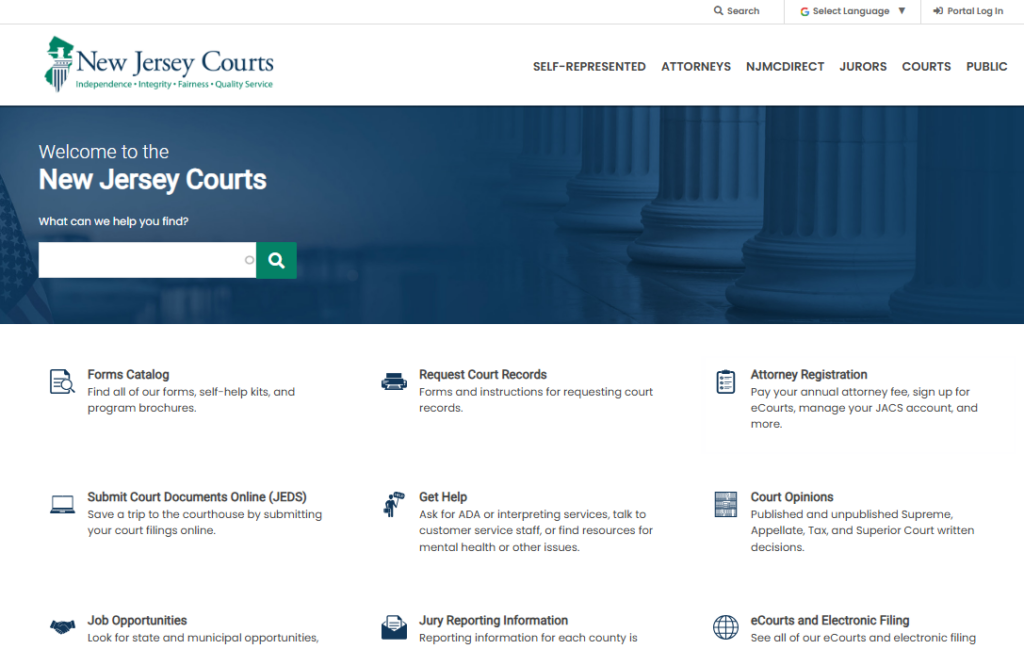
- New Jersey Attorney Search – Quick Steps
- Visit njcourts.gov
- Click Portal Log In at the top of the page
- Select Attorney Search (njcourts.gov)
- Enter the attorney’s name or license details
- View publicly available attorney information
- Provides summaries and filings for most criminal, civil, and family cases.
- Ideal for quick searches without visiting the courthouse.
- In-Person: Visit the Hudson County courthouse clerk’s office.
- Access physical records and request certified copies.
- By Mail: Submit a written request to the appropriate court office.
Cost for Records:
| Record Type | Online Access | Download / Print | Certified Copies |
|---|---|---|---|
| Civil Case Records | Free (summary view) | $0.50 per page | $2–$3 per page |
| Criminal Case Records | Free (summary view) | $0.50 per page | $2–$3 per page |
| Marriage / Divorce Records | N/A | $0.50 per page | $2–$3 per page |
| Traffic / Municipal Cases | Free (summary view) | $0.50 per page | $2–$3 per page |
OPRA & Public Records Rights in Hudson County, NJ
The Open Public Records Act (OPRA) governs access to government documents in New Jersey, including Hudson County. It establishes clear rules for what records are public and how residents can request them.
What OPRA Covers in Hudson County
OPRA is a New Jersey law that ensures transparency by giving the public the right to request government records. In Hudson County, this law applies to county offices, municipalities, and local agencies. Public records can include emails, meeting minutes, contracts, financial reports, and more. However, some records are exempt, such as those related to ongoing investigations, certain personnel files, or security-sensitive information.
Residents and organizations can use OPRA to request records from:
- Hudson County Clerk’s Office
- Hudson County Register of Deeds
- Municipal offices within Hudson County
- Local boards and commissions
How to Submit a Request
Requests must be made in writing—either by mail, email, or online submission where offered. While there’s no strict OPRA form, it should clearly describe the records sought. Including dates, subjects, and relevant departments helps agencies respond efficiently.
Key points for requesting records:
- Identify the specific records clearly.
- Submit the request to the appropriate office.
- Include contact information for follow-up.
Requests should avoid vague language, as it may slow processing.
Response Times and Fees
Agencies in Hudson County typically respond within 7 business days, as required by OPRA. In some cases, the period can be extended if the request is large or requires redaction.
Fees may apply for:
- Copies of documents (printed or digital)
- Mailing costs
- Specialized processing
Many offices offer electronic copies at lower costs, and some routine documents may be free.
Rights When a Request Is Denied
If a request is denied, the requester can appeal the decision. Denials usually fall into these categories:
- The record is exempt by law
- The record does not exist or cannot be found
- The request is too vague or broad
Appeals can be filed with the Government Records Council (GRC), which reviews disputes and can order disclosure if justified.
Recent Updates and Reforms
Recent amendments to OPRA have aimed to improve transparency and digital accessibility. For example, agencies are encouraged to maintain online portals for frequently requested records. Hudson County offices have increasingly adopted digital systems, making it easier to track requests and reduce administrative delays.
Key Terms to Note:
- Open records: Publicly available government documents
- Public records law: Legal framework governing access
- Government transparency: Openness in agency operations
- Record requester rights: Legal protections for those seeking information
OPRA provides a structured system that balances transparency with privacy and security concerns, allowing residents to request and receive public information efficiently. Hudson County offices follow these rules to ensure fair and timely responses while maintaining compliance with New Jersey law.
Other Important Record Types & Search Strategies
Hudson County, NJ public records cover a wide range of official documents, including vital, business, tax, and historical records. Citizens, researchers, and businesses can locate these documents through county offices, state departments, and online tools.
Vital Records — Birth, Death, Marriage
Vital records in Hudson County include birth certificates, death certificates, and marriage records. These documents are maintained by the Hudson County Clerk’s Office and the New Jersey Department of Health.
Residents can request copies in person, by mail, or online through the Clerk of Courts office, which maintains official vital records for public access. Standard fees vary: birth certificates generally cost around $25, death certificates $15–$20, and marriage records $10–$15 per copy. Online requests are available through the New Jersey Department of Health’s Vital Statistics portal, providing a convenient option for individuals unable to visit the county office.
Tips for requesting vital records:
- Provide full names, dates, and the place of the event.
- Include a valid ID when submitting in person or online.
- Some records may be restricted to immediate family or legal representatives.
These records are critical for legal purposes, genealogy, and official verification.
Business & Licensing Records
Hudson County public business records include business registrations, professional licenses, and permits. The Hudson County Clerk maintains business filings such as LLC registrations, partnership documents, and corporate records. Professional licenses, including medical, legal, and contractor licenses, are often issued by state boards and can be verified online.
Searching business records can reveal ownership, legal status, and registration dates. Individuals can use online portals provided by the County Clerk or New Jersey Business Gateway for document requests or verification.
Key search tips:
- Check for business name availability or historical filings.
- Confirm licensing status for professionals before hiring.
- Use online directories to track registered agents or ownership changes.
Tax & Assessor Records
Hudson County tax records provide information on property ownership, assessed values, and property taxes. Jersey City and other municipalities maintain assessor databases accessible online for property inquiries. Users can search by owner name, property address, or block/lot number.
The records typically include:
- Assessed value and property description
- Tax payment history
- Municipal liens or exemptions
Tax and assessor records are valuable for property research, real estate planning, and verifying ownership history. They are often updated annually, and some municipalities provide downloadable reports for convenience.
Historical & Archived Records
Historical and archived records in Hudson County are housed at the New Jersey State Archives and other local repositories. These include older vital records, municipal documents, and historical court files, often stored on microfilm.
Genealogists and researchers can explore these collections for family history, legal precedents, or historical research. The NJ State Archives is requesting microfilm copies, reviewing materials in-person, and ordering reproductions.
Research tips:
- Prepare specific names, dates, and locations before visiting.
- Some records may require advance appointments.
- Use archived indexes to narrow searches efficiently.
Step: OPRA Request Process
Submitting an OPRA request in Hudson County is a clear process that allows anyone to request access to public records. By following the right steps, citizens can efficiently obtain records from the county clerk or other record custodians.
When to Use an Official OPRA Request Form
An official OPRA request form is necessary whenever a request involves detailed public records or requires a formal submission. While informal requests, like phone calls or emails, may work for basic information, using the official form ensures your request is properly documented.
Key points:
- The form is available on the Hudson County Clerk’s website or at the county office.
- It provides a structured way to describe the records you need.
- Using the form can reduce processing delays and ensure compliance with the Open Public Records Act.
What Details Must Be Included
To make your request effective, certain information must be included. Missing details can slow down processing or cause the request to be returned.
Include the following:
- Requestor’s full name and contact information (email, phone, mailing address).
- Specific description of the records being requested. Be precise—include dates, departments, or case numbers if known.
- Preferred format of the records, such as printed copies, PDF, or Excel files.
- Date of request submission.
Providing clear and detailed information helps the record custodian identify the records quickly and reduces back-and-forth communication.
How to Submit Your OPRA Request
Hudson County allows multiple submission methods:
- Email: Send the completed form to the county clerk’s official email.
- Mail: Mail the form to the county clerk’s office at the address listed on their website.
- In-person: Deliver the form directly to the clerk’s office during business hours.
- Online Portals: Some departments offer web-based submission portals for faster processing.
Using these official channels ensures your request submission is tracked and acknowledged.
Typical Fees & Turnaround
Fees for OPRA requests in Hudson County are usually nominal, depending on the volume or type of records requested.
- Copying charges: Often a few cents per page.
- Certification fees: Additional if notarized or certified copies are needed.
- Turnaround time: Most requests are processed within 7 business days, but complex requests may take longer.
The county clerk or record custodian should provide a clear estimate of costs before processing large or detailed requests.
What to Expect After Submission
Once submitted, your OPRA request is officially logged by the Hudson County Clerk or relevant department.
- You may receive an acknowledgment with a reference number.
- The record custodian reviews the request and prepares the documents.
- If there are any questions or clarifications, the office may contact you.
- After processing, records are delivered in the requested format along with any applicable fees.
Keeping track of your request using the provided reference number helps in following up if there are delays.
Fees, Timeline & What to Expect
Hudson County public records requests usually involve reasonable fees, covering copies, certifications, and delivery. Response times generally range from a few days to a few weeks, depending on the type and volume of records requested.
How Public Records Fees Are Calculated
Public records fees are calculated based on the resources needed to produce the documents. Copies of standard records often carry a small per-page fee, while certified copies, which have legal validity, generally cost more. If records are mailed or sent electronically, delivery charges may also apply. For example, a certified court record may cost around $10–$15, while a larger request with multiple pages can result in higher fees. These charges support the county’s administrative processes and help maintain accurate and timely records.
Typical Response Time
Hudson County generally processes requests within 7–14 business days. Simple requests for recent records often receive faster responses, while older or archived records may take longer. Electronic requests tend to be processed more quickly than mailed requests. The volume of records, whether certification is required, and office workload all influence how quickly a request can be fulfilled. Clear and complete requests usually experience shorter response times, as staff can locate and prepare the records without follow-up questions.
Common Delays and How to Avoid Them
Delays in obtaining records often occur when requests are incomplete or unclear. Missing information, such as incorrect dates or incomplete names, can result in follow-up inquiries that extend processing time. Payment issues, such as submitting the wrong fee or omitting delivery costs, can also pause the process. In addition, older or archived records may require extra handling, which can lengthen the wait. To minimize delays, requesters should carefully specify all required details, include accurate fees, and submit requests through official channels. Taking these steps increases the chances of a smooth and timely response.
Public Records Offices — Location & Contact
Hudson County public records can be obtained from several key offices across Jersey City, NJ. Each office provides specific types of records and has distinct contact details, hours, and procedures for in-person or online requests.
Hudson County Clerk’s Office – Vital Records, Marriage Licenses, Property Records
The Hudson County Clerk’s Office is the primary custodian for vital records, marriage licenses, and property-related documents. Residents can visit the office in person or contact staff for guidance on document requests.
Contact Information:
- Address: 595 Newark Avenue, 2nd Floor, Jersey City, NJ 07306
- Phone: (201) 369-3434
- Office Hours: Monday–Friday, 8:30 AM – 4:30 PM
- Email: clerk@hudsoncountynj.org
Services Offered:
- Birth and death certificates
- Marriage licenses and records
- Property deed searches
- Notary and certification services
Visitors are encouraged to bring proper identification and check if appointments are required for specific requests. Online resources may allow pre-ordering vital records, which can reduce wait times.
Hudson County Register of Deeds & Mortgages – Property Records
The Register of Deeds & Mortgages maintains property ownership records and mortgage filings for Hudson County. This office is often co-located with the County Clerk’s Office for convenience.
Contact Information:
- Address: 595 Newark Avenue, 2nd Floor, Jersey City, NJ 07306
- Phone: (201) 369-3434
- Office Hours: Monday–Friday, 8:30 AM – 4:30 PM
- Email: deeds@hudsoncountynj.org
Services Offered:
- Property deed searches and copies
- Mortgage and lien records
- Document certification and indexing
Walk-ins are accepted, but certain document searches may require an appointment. Digital records may be accessed online for preliminary research.
Hudson County Sheriff’s Office – Records Bureau
The Sheriff’s Office Records Bureau handles police, criminal, and incident reports. This office is essential for obtaining law enforcement records in Hudson County.
Contact Information:
- Address: 257 Cornelison Avenue, Jersey City, NJ 07302
- Phone: (201) 795-6500
- Office Hours: Monday–Friday, 9:00 AM – 4:00 PM
- Email: sheriffrecords@hudsoncountynj.org
Services Offered:
- Criminal history and incident reports
- Police records requests
- Public safety and enforcement documentation
Certain reports may require a written request or a notarized form. It is recommended to call ahead to confirm availability and fees.
Hudson County Court Public Records – Court Dockets, Civil & Criminal Records
The Hudson County Court maintains civil and criminal court records, including dockets and case histories. This office serves attorneys, researchers, and members of the public seeking official court documentation.
Contact Information:
- Address: 583 Newark Avenue, Jersey City, NJ 07306
- Phone: (201) 795-6500
- Office Hours: Monday–Friday, 8:30 AM – 4:30 PM
- Email: courtrecords@hudsoncountynj.org
Services Offered:
- Civil and criminal court records
- Case dockets and hearing schedules
- Court judgments and filings
Appointments may be needed for extensive records requests. Many court documents are searchable online through official Hudson County court databases.
FAQ — About Public Records
Hudson County public records are mostly available to anyone, though certain sensitive information is restricted. Requests are usually straightforward, but some documents may require formal procedures.
Can I access my neighbor’s property records?
Property records in Hudson County are generally public, so anyone can request information about property ownership, tax assessments, and recorded deeds. While basic ownership and assessment data are accessible, personal details such as Social Security numbers or private financial information are protected by law. Requests can be submitted in person at the county clerk or tax assessor’s office, and online databases may provide easy access to common property details.
Are the records free to inspect?
Many Hudson County public records can be viewed at no charge in the appropriate office, but copies usually come with a fee based on the number of pages and whether a certified copy is requested. Standard photocopies are inexpensive, while certified or notarized documents may require a higher fee. Online requests or digital records sometimes include additional processing costs, but the convenience of digital access can save time compared with in-person visits.
Can anyone request public records?
Yes, most public records in Hudson County are accessible to any member of the public, including residents and non-residents. Requesters do not need special credentials, though identification may be required for certain sensitive documents. Some records, like active criminal investigations or juvenile files, remain restricted, but the majority of government and property records are open to public requests through official forms and procedures.
What can’t be obtained via OPRA?
The Open Public Records Act (OPRA) allows access to most government records, but certain types of information are legally restricted. Protected files include Social Security numbers, active law enforcement investigations, sensitive personal or medical records, and some educational documents. When a request is denied, the county provides a written explanation citing the applicable law, ensuring that privacy and security standards are maintained while guiding requesters on acceptable alternatives.
How do I appeal a denial?
If a public record request is denied, an appeal can be submitted to the Government Records Council (GRC). The appeal process involves providing the denial notice, explaining the reason for requesting the record, and submitting any supporting documentation. The GRC reviews the appeal and may order disclosure if the denial was improper, and response times typically range from thirty to sixty days. Maintaining clear documentation of requests and communications can help ensure a smooth review process.